Poor Bunny Timing Guide for Trap Cycles
Why late reactions end more runs than hard levels
Most failed runs do not start with a hard trap. They start one beat earlier, when the player notices danger too late and jumps without a clear landing plan.
That is why timing matters more than rushing. Poor Bunny is built around a simple loop: move, jump, collect carrots, avoid obstacles, and survive long enough to push the score higher. When that loop speeds up, the real challenge is not button pressing. It is reading what the trap will do next before your bunny gets there.
The good news is that this skill is trainable. A few calmer runs inside an instant browser run can teach more than one messy high-score attempt. The goal of this guide is to slow the game down in your head, so crowded screens stop feeling random.
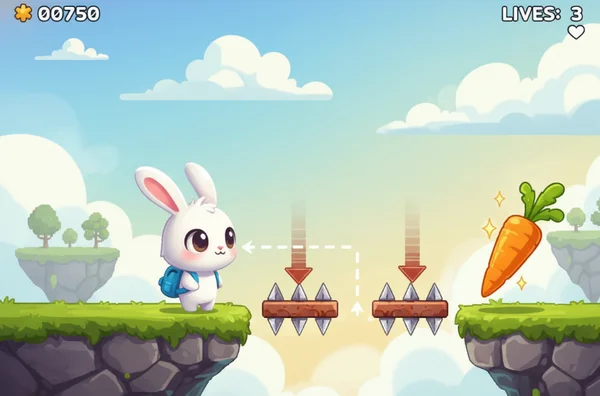
What trap timing looks like before the screen gets crowded
Reading one obstacle cycle before chasing the next carrot
Before the run gets busy, the screen gives you clean information. One trap moves. One carrot sits in a tempting spot. One jump either keeps the run stable or pushes you into a bad landing.
That is the moment to read the cycle, not to react late. Watch the obstacle complete one full motion before you decide whether the carrot is worth it. If you know where the trap resets, when it becomes dangerous, and where your bunny will land, the jump feels controlled instead of rushed.
This matches the game's basic loop from the official site: jump, survive, and collect carrots without giving obstacles an easy hit. A carrot only helps the run if it fits inside that survival line. If it pulls you off rhythm, it is not really a free pickup.
Spotting the safe window instead of reacting at the last second
Many players wait for the trap to look dangerous and then jump. That is usually too late. A safer habit is to look for the calm window just before the obstacle becomes threatening.
This small shift changes everything. Instead of escaping danger, you move during the part of the cycle that already gives you space. That makes your jump earlier, cleaner, and easier to repeat during the next run.
A quick play loop is perfect for building this habit because the restart cost is low. You can run short attempts that focus on one timing read, not on a full personal-best score.
Three common timing scenarios that ruin good runs
Jumping on rhythm when a trap is about to reset
This mistake feels safe because the jump matches your current rhythm. The problem is that the trap is about to change state. You move on the beat you like, but the obstacle moves on the beat that actually matters.
When this happens, stop trusting your own rhythm for a second. Let the trap show its reset point, then jump on the new opening. Good runs last longer when the obstacle controls the clock and you adapt to it, not the other way around.
Chasing a carrot that breaks your landing line
Some carrots are placed where they look easy but ruin the next landing. You jump toward the reward, touch it, and then come down with no safe lane left. The run feels unlucky, but the mistake happened before the takeoff.
A better question is simple: where do you land after the carrot? If the answer is unclear, skip it. Players who want stronger score challenge sessions need to treat carrots as bonuses inside a safe route, not as commands that force every jump.
Freezing when two hazards overlap
This is the classic crowded-screen error. Two threats enter the same area, and the player stops reading both. The result is a late jump, a short hop, or no move at all.
The fix is not faster thinking. It is narrower thinking. Pick the hazard that affects your landing first, solve that one, and let the second obstacle become the next problem. When the screen gets chaotic, single-focus decisions are more reliable than wide, frantic scanning.
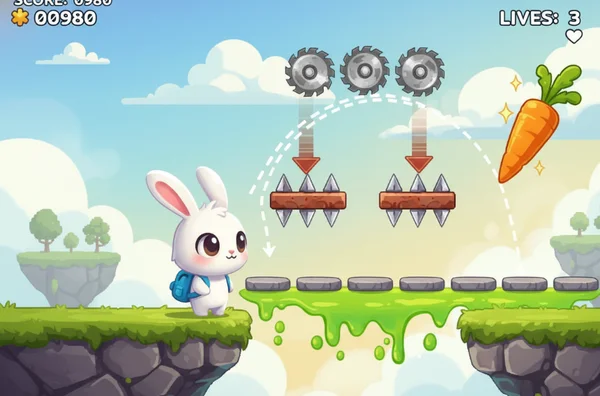
How to slow the game down in your head
Choosing one visual anchor before each jump
A visual anchor is the one thing you watch before takeoff. It could be the edge of a platform, the bottom of a moving trap, or the safe lane where you want to land. The point is to give your eyes one job.
Without an anchor, your attention bounces between the bunny, the carrot, and every moving hazard. That creates rushed jumps. With an anchor, the jump starts from one clear read, and your timing becomes steadier.
This is especially useful on repeat runs because the game rewards pattern comfort. The site's current content library leans heavily on walkthroughs, trap guides, and high-score play for a reason: stable reads matter more than flashy movement.
Keeping survival ahead of greedy movement
Greedy movement is any jump you take because the reward looks close, even when the route feels wrong. Survival movement is different. It keeps the bunny in a lane that stays playable on the next beat.
If you want better timing, survival has to win more often. That does not mean playing timidly. It means understanding that longer runs create more carrot chances later. One smart skip can lead to a much cleaner stretch than one risky grab.
A simple practice loop for cleaner timing
Short warm-up runs for rhythm reading
Start with two or three short runs where score does not matter. Use those attempts only to watch one trap cycle before every serious jump. Do not chase awkward carrots. Do not try to rescue bad landings with scramble moves.
This kind of warm-up fits the site's repeat-play style. Poor Bunny is framed as a quick browser game that works well in short sessions, on desktop or mobile, and across casual or challenge-focused play. That makes short rhythm drills more realistic than long, exhausting grind sessions.
When to reset and start a calmer run
Some runs are technically alive but already off rhythm. You have missed the rhythm, the screen feels fast, and every move turns reactive. That is usually the moment to reset instead of forcing one more late save attempt.
A reset is not failure if it protects your timing. Starting a new next practice run with calmer eyes often produces better survival than dragging a broken attempt forward. The point of practice is clean reads, not dramatic recoveries every few seconds.

What to do next before your next score attempt
Pick one timing habit and test only that. Watch one trap cycle before each risky jump. Skip one carrot that breaks your landing. Choose one visual anchor before takeoff.
Then build from there. Once the run feels calmer, you can start adding more aggressive carrot grabs and faster reactions. Better scores usually come after better reads, not before them.
Poor Bunny stays fun because it rewards tiny improvements fast. If the next session feels cleaner and less frantic, the timing work is already paying off.